
Two SROs, 28 Schools: Are Simi Valley Kids Really Protected?
The Simi Valley Police Officers’ Association says the district’s current school safety model leaves critical gaps across 28 campuses, raising urgent questions for parents, district leaders, and elected officials about whether students are truly protected.
FEATUREDSIMI VALLEY NEWSOPINION
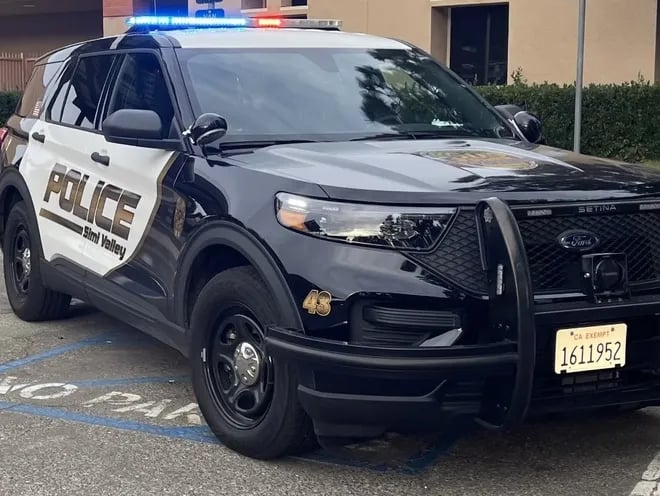
Parents in Simi Valley send their children to school expecting that campus safety will be treated as a non‑negotiable priority, not an afterthought. Many parents may also feel they owe a debt of gratitude to the Simi Valley Police Officers’ Association for taking a public stand on student safety and for forcing a broader conversation about whether current protections are adequate.
Recent incidents across the Simi Valley Unified School District (SVUSD) and the SVPOA’s new public position statement are raising serious questions about whether that expectation is being met for the families who rely on the district’s 28 schools every day.
POLICE ASSOCIATION CITES A “PUBLIC SAFETY GAP”
According to the SVPOA, most school-related calls are currently handled by patrol officers pulled off their regular beats. The association describes this as a “public safety gap”: patrol officers respond professionally, but they are not embedded on campus, do not always have specialized SRO training, and cannot provide the same proactive, relationship-based safety services. In the association’s view, this reactive approach creates “critical holes” in threat assessment, early intervention, and campus-specific problem-solving.
GUN INCIDENTS INTENSIFY FEARS
Concerns about campus safety have also been heightened by a 2023 gun incident tied to Royal High School. According to reporting, a student tip led police to arrest a 15‑year‑old who allegedly brought a 9‑millimeter handgun, a 15‑round magazine, and additional ammunition to a crowded Royal High School football game, where he was taken into custody on or near campus; days later, officers arrested a second 15‑year‑old after finding another handgun at his home in connection with the case.
For many parents and staff, that episode underscored how quickly a weapons threat can develop around a school event and raised new questions about how prepared the district is to prevent, detect, and respond to similar incidents in the future. It also reinforced broader concerns about whether SVUSD has the staffing, planning, and on-campus safety infrastructure needed to handle fast-moving situations involving weapons on or near school grounds.
WHY SRO STAFFING IS CENTRAL
Supporters of expanding the SRO program point to incidents like the Royal High lockdown as examples of why trained, campus-based officers matter. In a fast-moving emergency, an SRO who already knows the campus layout, daily routines, student population, and key staff can coordinate more quickly with administrators and responding patrol units, improving communication and situational awareness.
Supporters also emphasize that the value of an SRO extends well beyond emergency response. A properly trained and consistently present SRO can help identify warning signs before they escalate, build working relationships with students and staff, participate in threat assessments, and provide a familiar law-enforcement presence that is integrated into campus life rather than arriving only after a crisis has begun.
Without that embedded presence, schools depend on off-site patrol officers who may be responding from elsewhere in the city, navigating traffic, balancing other calls for service, and arriving with less familiarity with the campus, school culture, and the individuals involved. For many families, that gap is exactly why the SVPOA’s warning about a “public safety gap” has resonated so strongly.[instagram]
OTHER CAMPUS-LEVEL SAFETY PROBLEMS
Beyond weapons-related scares, families at several schools have raised concerns about bullying, threats, and everyday supervision. Allegations of bullying and harassment at Simi Valley High School, the “kill list” complaint at Crestview Elementary, and questions about safety at Santa Susana Elementary have fed a perception that the district tends to respond to individual complaints rather than operating from a clear, district-wide prevention plan.
At Justin Early Learners Academy, an SVUSD preschool and TK campus, internal communications acknowledged “multiple problems in the parking lot” over several months. In response, the school implemented a phased overhaul of parking and drop-off procedures. Changes included staff-supervised check-in at a front gate, restricting the main lot to staff, locking a secondary lot to prevent drop-off there, and restructuring afternoon dismissal so students are released from controlled areas while families wait at the main entrance.
BOARD PRESIDENT DAWN SMOLLEN’S INTERVENTION AT JELA
District records and parent accounts indicate that Board of Trustees President Dawn Smollen became directly involved at JELA after speaking with a parent who raised detailed safety concerns. Following that conversation, Smollen appears to have directed Superintendent Hani Youssef and district staff to ensure additional safety measures were implemented, a step that, according to those accounts, helped bring about the redesigned parking and drop-off system.
Supporters cite JELA as evidence that board-level attention can drive concrete changes on campus. Others note that the intervention followed months of problems and parent complaints, and question why district leadership did not act sooner or apply similar scrutiny to other sites facing safety concerns.
SUPERINTENDENT YOUSSEF’S RESPONSE UNDER SCRUTINY
The SVPOA’s public critique places Superintendent Hani Youssef and SVUSD leadership under renewed scrutiny. The association portrays the district’s safety infrastructure as lagging behind what is needed for a district of SVUSD’s size and complexity.
Some parents and safety advocates say the district’s response to repeated incidents has created the impression of an “it won’t happen here” mindset, with significant changes occurring only after public pressure, documented complaints, or high-profile incidents. By calling for a “modern, well-designed SRO program” that is “staffed, trained and funded as a core public safety function,” the association is pressing district leadership to explain why SRO staffing has not kept pace with district growth and repeated warning signs. The combination of campus incidents, operational safety concerns, and unresolved parent complaints is fueling broader questions about how SVUSD prioritizes and manages campus safety.[instagram]
POLITICAL IMPLICATIONS FOR SMOLLEN AND JUBRAN
As school safety becomes a more visible public issue, criticism from law enforcement and other organizations is creating a more difficult political environment for Simi Valley’s education and civic leadership. For Board President Dawn Smollen, the ongoing debate over campus safety is likely to bring renewed attention to how the board has handled repeated warnings, staffing concerns, and school-site complaints.
The scrutiny also extends to Simi Valley Unified School District Trustee and Board Clerk Kareem Jubran, who is seeking to lead the entire city as a mayoral candidate. If voters conclude that district leadership has failed to keep schools adequately safe, that record could become a major political liability for Jubran.
In that case, many residents may reasonably ask a broader question: if he has not helped ensure strong, consistent school safety, how will he be able to keep Simi Valley safe as a whole?
ASSOCIATION URGES COLLABORATIVE SRO OVERHAUL
In its position statement, the SVPOA calls on city officials and SVUSD leadership to “acknowledge the existing gaps, commit to strengthening the SRO program, and work collaboratively and transparently to determine and fund the appropriate level of dedicated SRO staffing for SVUSD”. The association frames SRO coverage as a basic public-safety service rather than a discretionary add-on.
Supporters of change say that moving from what the association describes as a “reactive patchwork of coverage” to a stable, school-based safety partnership will require clear commitments from both the city and the district. With multiple incidents and ongoing criticism converging, how SVUSD and city leaders respond in the coming months may determine not only the future of the SRO program but also public confidence in the district’s ability to keep students safe.
CONCLUSION
Ultimately, the SVPOA’s public statement signals more than frustration with SRO staffing levels — it reflects a broader sense that the Simi Valley community is beginning to come together around the shared belief that the safety of Simi Valley school children cannot depend on the superintendent’s office maintaining an “it won’t happen here” approach to campus security. When law enforcement representatives, parents, and school-site voices all point to the same gaps in prevention, response, and staffing, the message becomes harder for district leadership to dismiss. The longer those concerns remain unresolved, the harder it becomes to argue that student safety is truly being treated with the urgency it demands.
For parents, these issues are not abstract policy debates — they are daily questions about whether children are truly safe when they are dropped off at school. Sharing concerns with school administrators, speaking at board meetings, and contacting city leaders about SRO staffing and campus safety are concrete ways for families to insist that student safety be treated as a core responsibility, not a box to be checked after the next crisis.
What parents can do now
Attend at least one school board meeting this semester and listen for how safety is discussed.
Email the Superintendent Hani Youssef at Hani.Youssef@simivalleyusd.org and board to ask specific questions about SRO staffing and campus safety plans at your child’s school.
Talk with your principal about your site’s current safety procedures, lockdown protocols, and who is responsible for on-campus security day to day.
The American Federalist is the Official Publication of The Freedom Project © 2026
The American Federalist empowers the generation of tomorrow for a brighter future and hope for every individual.
We are telling America's Story
Subscribe to our newsletter and never miss a story.
We care about your data in our privacy policy.