
Parents Demand Answers From SVUSD After Simi Valley Students Allegedly Appeared on School “Kill List”
Parents, lawsuits, and prior controversies fuel growing questions about district leadership, communication, and student safety practices
FEATUREDCOMMUNITYEDUCATION
SIMI VALLEY, Calif. — A controversy surrounding allegations that administrators at Crestview Elementary School failed to fully disclose a student-created alleged threat list is rapidly expanding into a broader crisis for the Simi Valley Unified School District, fueling renewed scrutiny of district leadership, school safety procedures, and public transparency.
Parents and community members are now questioning whether district officials — including Superintendent Dr. Hani Youssef, SVUSD Public Relations Officer Jake Finch, school board trustees, and senior district leadership — adequately responded to allegations involving student threats and campus safety concerns.
At the center of the controversy are allegations that Crestview Elementary Principal Annette Babakhanian did not initially inform parents that students had allegedly been named on what some parents described as a “kill list,” instead characterizing the matter as a disciplinary issue involving “restorative justice.”
According to parents involved, the seriousness of the reported threat only became clear after a school staff member — whose own child was reportedly named on the alleged list — privately warned families.
“My child and her friends were placed on a kill list at school,” one parent stated. “The principal told us she was putting the kids through restorative justice but never disclosed that it was a kill list.”
Parents involved in the controversy allege the district failed to immediately notify families and failed to properly preserve evidence connected to the reported incident, raising concerns about campus safety procedures and communication with parents.
According to correspondence and statements provided by parents to The American Federalist News, families repeatedly contacted district leadership seeking clarification regarding the reported threat and district response.
The American Federalist News could not independently verify the names of students on the alleged Kill List.
The allegations have generated unusually strong reactions from parents, in part because school safety experts treat written threats targeting students as potentially serious warning signs.
What Is a “Kill List”?
In school safety and law enforcement terminology, a “kill list” generally refers to a written or verbal list identifying intended targets of violence or harm. Such lists are typically treated seriously by schools, mental health professionals, and police agencies because they can indicate premeditation, targeted aggression, or escalating violent ideation.
Following numerous school shootings and targeted campus attacks across the United States, modern threat assessment protocols increasingly call for immediate investigation, parental notification, documentation preservation, and coordination with law enforcement whenever students reportedly create lists naming classmates or staff members as potential targets.
According to multiple national school safety databases, the United States experienced more than 200 reported K-12 school shooting incidents during 2025, with some national trackers documenting as many as 233 incidents nationwide.
School safety experts additionally report a growing number of investigations involving reported “kill lists,” written targeting documents, online hit lists, violent drawings, and threat assessment interventions across U.S. public schools.
Threat assessment professionals generally warn that written targeting behavior and documented violent ideation involving students require rapid intervention because unresolved threats can potentially escalate into violent incidents if not immediately addressed.
Parents Say They Turned to Police After Receiving No Response
Families involved in the controversy say they repeatedly attempted to contact district leadership after learning about the reported threat.
According to parents, multiple emails regarding the incident were sent to district leadership and members of the SVUSD Board of Trustees.
Parents say they did not receive a response from Superintendent Dr. Hani Youssef or board members.
One parent alleges that after receiving no reply from district leadership, they went directly to the school accompanied by police officers to file a report regarding the incident.
According to parents, responding officers indicated they were aware of the alleged list and that school administrators had previously seen it.
The involvement of law enforcement marked a turning point in the controversy, transforming what parents believed had initially been treated internally as a disciplinary issue into what they describe as a documented public safety concern.
It remains unclear whether any criminal investigation or disciplinary action resulted from the reported incident.
The controversy later intensified during a district civic event attended by Superintendent Youssef.
“He asked why my name sounded familiar,” one parent recalled. “I told him it was because we had contacted him about the alleged kill list and never received a response. He let go of my hand, turned around, and walked away.”
District Response
After publication inquiries from The American Federalist News, Simi Valley Unified School District provided a written response through district representative Jamie Snodgrass.
In the statement, Snodgrass referenced prior district communications regarding school safety policies and procedures.
“Please refer to the email sent to you on Wednesday, January 7, 2026, from Rebecca Nelson, which outlines the District’s policies and regulations regarding safety and security, including campus access, visitor procedures, campus security, emergency preparedness, threat assessment, and related student safety protocols.”
Snodgrass further stated:
“As noted in that correspondence, the security and well-being of students remains a top priority, and District safety measures are consistently reviewed and evaluated at all sites.”
The district representative declined to address allegations involving specific personnel or ongoing safety matters.
“The District does not respond to speculative or personnel-related questions. All student safety matters are reviewed through the appropriate administrative process.”
The district additionally cited student privacy laws as limiting what information could be publicly disclosed.
“Student privacy laws and District obligations limit the information that may be disclosed to individuals who are not the parent/guardian of a student directly involved in the matter, including information that may have been shared by a third party.”
District officials have denied allegations of misconduct and stated that student safety matters are handled through established administrative procedures.
Critics of the district argue the response did not directly address whether parents were promptly informed about the reported threat, whether district leadership was aware of the incident before police became involved, or whether evidence connected to the alleged list had been properly secured.
Questions Expand Beyond Crestview
As additional details surrounding the Crestview Elementary controversy continue to emerge, some parents and residents are questioning whether the matter reflects broader concerns within Simi Valley Unified School District rather than an isolated event involving a single campus.
Some residents believe students involved in threatening behavior or violent targeting incidents may not be limited to a single school and argue parents have a fundamental right to know if their children have allegedly been named in documented threats involving violence at school.
Parents involved in the controversy argue that withholding information about reported targeted threats prevents families from making informed decisions regarding student safety and erodes public trust between schools and parents.
The debate has intensified broader questions facing school districts nationwide regarding how schools should balance student privacy protections, disciplinary procedures, mental health intervention, and parental notification when reported violent threats involving children emerge.
Political Pressure Mounts Ahead of Elections
As the controversy spread beyond Crestview Elementary, attention increasingly shifted toward district leadership and the Board of Trustees.
Community members have publicly questioned whether members of the Simi Valley Unified School District Board of Trustees were informed about the reported threat and whether district leadership acted appropriately.
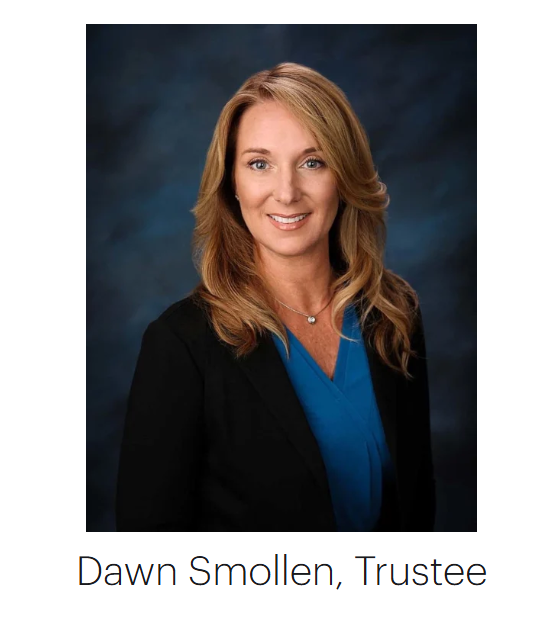
Some residents believe the controversy could create political challenges for incumbents associated with district leadership, including Board President Dawn Smollen and Trustee Dr. Stephen Pietrolungo, both reportedly facing reelection campaigns this fall.
According to some Simi Valley residents, Superintendent Dr. Hani Youssef’s handling of the controversy has become politically damaging for the district and Board leadership.
Some residents additionally allege board members have privately discussed concerns regarding Youssef’s conduct as superintendent, though the district has not publicly confirmed those claims.
Residents contend that if district officials or board members knew students may have been unsafe and failed to inform parents, the controversy has become a growing issue in local school board discussions ahead of the election season.
Earlier Lawsuit Renews Scrutiny of Principal Annette Babakhanian
The Crestview allegations are also drawing renewed attention to a recently filed lawsuit involving Simi Valley High School.
Court filings reviewed by The American Federalist News allege that former Simi Valley High administrator Annette Babakhanian and other district officials failed to adequately respond to repeated reports of sexual harassment, bullying, threats, and intimidation involving a female student.
According to the complaint, district officials allegedly minimized reports made by the student and her parents and discouraged the family from pursuing Title IX complaints.
The lawsuit further alleges administrators treated the victim herself as “the problem” rather than addressing the conduct of students accused of harassment.
Babakhanian is specifically referenced in the complaint in connection with alleged failures to appropriately respond to threats and harassment reports.
Subsequent to the allegations described in the lawsuit, Babakhanian later became principal of Crestview Elementary School.
For some critics of the district, the overlap between the two controversies has intensified concerns regarding institutional accountability and leadership culture within SVUSD.
The Shadow of Garden Grove
For longtime critics of the district, the Crestview controversy has revived scrutiny of earlier allegations involving student safety and administrative transparency.
One of the district’s most controversial prior incidents involved allegations of abuse against special education students at Garden Grove Elementary School.
The litigation involved children with severe disabilities, including students with Down syndrome, epilepsy, cerebral palsy, speech impairments, and other developmental conditions.
Ventura attorney Ron Bamieh, representing multiple families, publicly alleged district officials failed to properly disclose allegations involving physical, verbal, and emotional abuse inside a special education classroom.
The lawsuit included allegations that vulnerable children were subjected to choke holds, aggressive physical handling, verbal humiliation, and neglect.
Public filings further alleged complaints regarding abuse dated back years before the allegations became public.
SVUSD Public Relations Officer Jake Finch publicly denied allegations that the district engaged in a cover-up, stating administrators investigated complaints when they were raised.
Bamieh publicly disputed that characterization.
“The story here is the cover up,” Bamieh said. “The hiding of it exposed other children to horrible abuse. People in the SVUSD need to be held accountable.”
Public reports later indicated that the district agreed to a proposed settlement, reportedly valued at approximately $6.8 million, involving families connected to the litigation.
The allegations generated widespread public attention in part because many of the alleged victims were reportedly non-verbal or severely disabled children who allegedly lacked the ability to fully communicate what had occurred.
A District Under Intensifying Scrutiny
For many residents, the controversies involving Crestview Elementary, Simi Valley High School, and Garden Grove Elementary now appear interconnected — not necessarily by identical facts, but by recurring accusations involving delayed disclosure, institutional defensiveness, and limited communication with parents.
For critics, the controversies share a common theme: allegations that district leadership prioritized internal management of crises over direct communication with families.
Critics increasingly argue that Superintendent Dr. Hani Youssef and SVUSD Public Relations Officer Jake Finch have become symbols of what some parents describe as a district culture emphasizing institutional reputation over proactive communication with families.
Parents and community advocates now question whether serious incidents involving reported student threats, harassment, bullying, and abuse have repeatedly been handled internally without sufficient disclosure to the public.
The controversies have fueled calls for independent oversight, greater accountability, and structural reforms within the district.
“Parents deserve transparency when threats involving students arise,” one parent said.
The Central Question
As scrutiny intensifies, the controversy surrounding Crestview Elementary is evolving far beyond a single disciplinary incident at a neighborhood elementary school.
It is becoming a broader public debate about transparency, institutional accountability, political leadership, and the responsibilities school districts owe families when children may be at risk.
For Simi Valley Unified School District, the controversy now threatens to extend into the upcoming election season, intensify public distrust, and deepen questions surrounding district leadership.
Until district leadership publicly addresses the allegations in greater detail, the Crestview controversy is likely to remain a flashpoint in a growing debate over school safety, parental trust, and accountability within Simi Valley Unified School District.
And increasingly, one question continues echoing across the community:
What information was available to district leadership — and when was it known?
Editor’s Note: Allegations described in this article remain disputed. The American Federalist News reviewed parent statements, litigation filings, district correspondence, and publicly available reporting in preparing this story. District officials deny allegations of wrongdoing. The American Federalist News also reached out to Simi Valley Police Chief Steven Short and Simi Valley Unified School District Board President Dawn Smollen for comment. As of the time of publication, neither had responded.
The American Federalist is the Official Publication of The Freedom Project © 2026
The American Federalist empowers the generation of tomorrow for a brighter future and hope for every individual.
We are telling America's Story
Subscribe to our newsletter and never miss a story.
We care about your data in our privacy policy.